RevOpsSaaS RevOps AI Agents12 min read

This blog cuts through the AI noise. We’ll explain why large language models (LLMs) struggle with numerical precision, where traditional machine learning still dominates for forecasting accuracy, and how to build AI agents that actually deliver reliable financial analysis. Whether you’re a CFO exploring AI-powered FP&A tools, a revenue operations leader trying to improve forecast accuracy, or a data team evaluating machine learning forecasting models, this is the practical breakdown you need.
AI has transformed how businesses operate across software engineering, customer support, and content marketing. But when it comes to AI for financial forecasting and budgeting, the picture is far more complicated. Finance leaders and FP&A teams are under pressure to adopt AI tools, yet many find that off-the-shelf solutions fall short when applied to revenue forecasting, budget modeling, or pipeline analysis.
The AI revolution has been uneven. Large language models like GPT-5.4 and Opus excel at processing unstructured data: drafting communications, summarizing documents, generating code, and analyzing qualitative inputs. These strengths map naturally onto tasks like customer support, content generation, and even software development.
Financial forecasting and budgeting are a different beast entirely. Numbers demand precision. A single transposed digit, a misinterpreted cell reference, or an incorrect data retrieval can corrupt an entire financial model. In FP&A, there is no room for probabilistic approximation.
LLMs are probabilistic by design. They generate outputs based on statistical patterns in training data, which makes them powerful for language tasks but fundamentally unreliable for tasks requiring deterministic numerical accuracy. Key failure modes include:
“If you ask an LLM to retrieve a number from a database, it might not come back with the same data every time. One wrong datapoint can throw off an entire model.”
This is why AI-powered financial forecasting requires a more nuanced architecture than simply plugging data into a chatbot and asking for projections.
Before LLMs dominated the AI conversation, traditional machine learning algorithms were quietly solving hard forecasting problems in finance. They still are. And for many FP&A use cases, they remain the superior choice.
Traditional machine learning models, including logistic regression, gradient boosting, random forests, and time series are built for structured, numerical data. They are:
Consider the challenge of forecasting sales bookings, one of the most critical and most difficult Sales and FP&A problems. A well-constructed logistic regression model can ingest:
By training on this data, the model learns which combinations of attributes predict closed revenue with high confidence. Accuracy rates of 95 to 98 percent are achievable when models are properly trained, validated, and tuned against historical data. That level of precision is unattainable with a general-purpose LLM operating on raw spreadsheet data.
The key insight is that traditional machine learning is not legacy technology to be replaced by LLMs. For structured financial data, it is the right tool, and treating it as such is a competitive advantage for finance teams willing to invest in proper model development.
That said, dismissing LLMs entirely from the FP&A toolkit would be a mistake. The key is understanding their actual comparative advantage: natural language understanding, code generation, and structured reasoning over well-documented processes. When applied correctly, LLMs can dramatically accelerate financial analysis workflows.
The most effective approach is building purpose-built AI agents for specific analytical tasks, rather than expecting a general-purpose chatbot to handle open-ended financial questions.
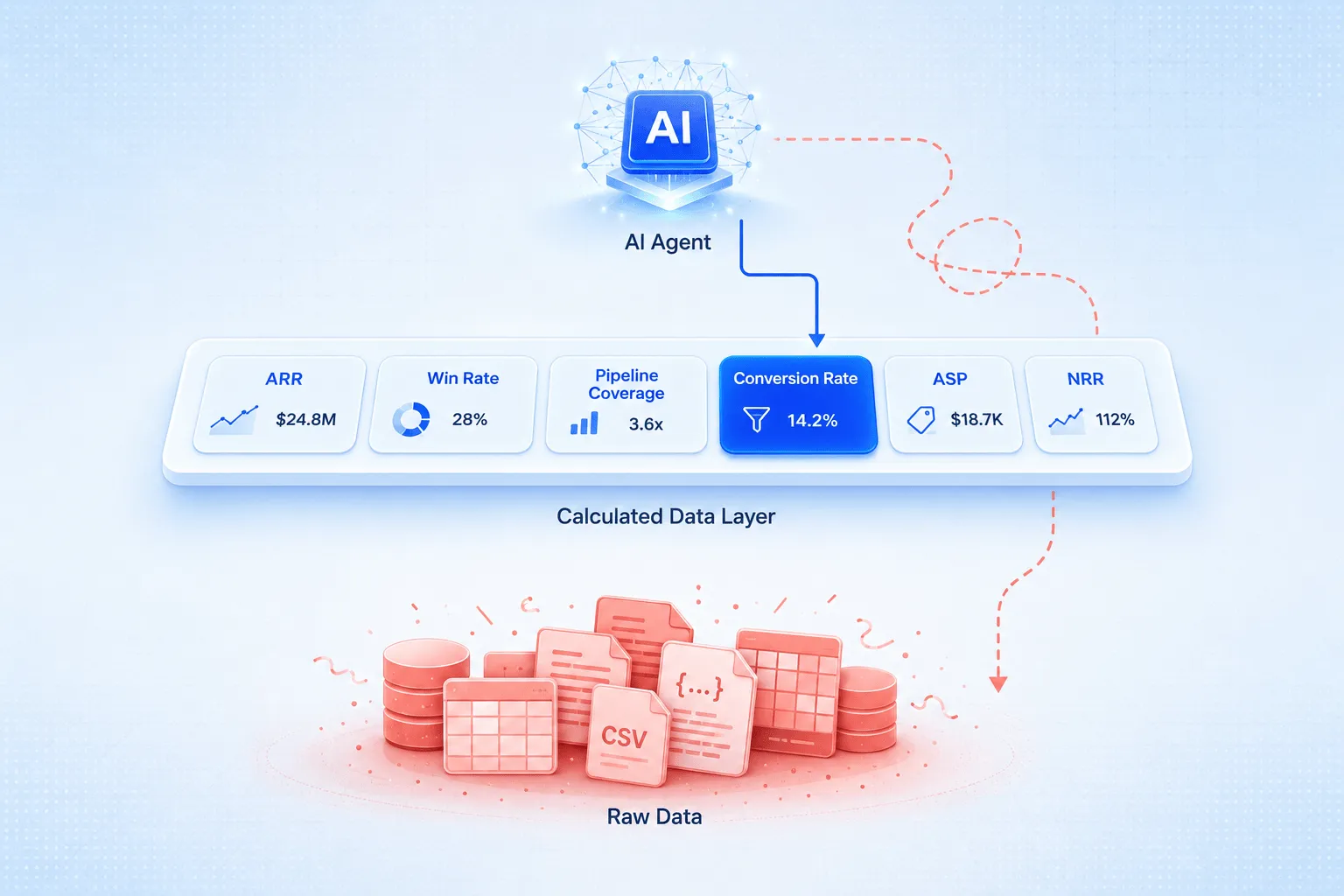
Continue running the traditional mathematical or machine learning models, but allow AI agents to access the inputs and outputs of the model to surface insights, recommendation, and results.
An AI agent is a system in which an LLM is given access to tools (APIs, databases, code execution environments) and a structured workflow that guides it through a defined analytical process. Unlike a simple chatbot, an agent can:
Have the agent mimic what a human analyst would do, every step the analyst would take. This would ensure the results are high quality, understandable, and verifiable.
Based on practical experience building agents for budgeting and forecasting workflows, four principles consistently separate agents that work from those that fail:
“You can ask the LLM to build you a spreadsheet or a slide by giving it an example. You just built an agent that can be executed day-in and day-out for conducting your analysis.”
Effective AI-powered forecasting and budgeting is not about choosing one technology. It’s about assembling the right stack for each layer of the problem.
Before any AI model can produce reliable outputs, the underlying data must be clean, consistently defined, and accessible. This means:
Deploy machine learning models for core forecasting tasks where numerical precision is paramount: bookings forecasting, churn prediction, renewal scoring, demand planning. These models run on structured data and return deterministic outputs that can be validated and trusted.
Deploy LLM-based agents for analysis orchestration, report generation, variance commentary, and workflow automation. These agents retrieve data through well-documented APIs, execute step-by-step analytical workflows, and package results for human review.
AI outputs in finance should be treated as a first draft, not a final answer. Build review checkpoints into agent workflows. Anomaly detection, variance flags, and confidence thresholds help direct human attention to where judgment is most needed.
Asking a general-purpose AI chatbot to build a financial model from scratch, reconcile accounts, or calculate retention metrics without a structured agent framework is a recipe for errors. Use machine learning models or deterministic code for numerical computation. Use LLMs for orchestration and communication.
No AI forecasting tool, however sophisticated, can compensate for poor data hygiene. Inconsistent CRM stage definitions, duplicate records, and missing historical data will degrade model accuracy regardless of the algorithm. Invest in data quality before investing in AI.
AI agents are code. They should be version controlled, tested, and deployed with the same rigor as production software. Prompt changes, API updates, and schema changes can silently break agent behavior. Treat agent development as an engineering discipline.
Agent building requires significant trial and error. Initial prototypes will make mistakes. Plan for iteration cycles, budget for technical resources, and measure agent performance against a baseline before declaring success. The organizations achieving the best results are those treating AI agent development as an ongoing capability, not a one-time project.
AI is genuinely transforming forecasting and budgeting for finance teams willing to approach it thoughtfully. The organizations achieving the best results are not those who adopted AI the fastest. They are those who understood which problems each type of AI actually solves.
Traditional machine learning delivers 95 to 98 percent accuracy on structured forecasting problems like sales bookings, churn, and demand planning. LLM-based agents save dozens of hours per month by automating the retrieval, analysis, and packaging of financial data. Neither technology alone is sufficient. Together, they form the foundation of a modern AI-powered FP&A function.
The path forward is not about replacing analysts. It’s about giving analysts the tools to work at a higher level: less time rebuilding the same Excel model every month, more time interpreting results and driving decisions.
The key is understanding what specific problem you are trying to solve, and using the right model, agent, or tool to execute against it. The reward is substantial and well worth the investment.
Related topics: AI forecasting tools, FP&A automation, machine learning for finance, AI budgeting software, predictive analytics for CFOs, LLM agents for financial analysis, revenue forecasting AI, SaaS metrics automation, financial planning AI, AI-powered reporting

Join 30+ B2B software companies and PE firms that trust Discern for automated, board-ready analytics.
Book a Demo


4.8/5 100+ Reviews
Trusted by the world leaders